Showing posts with label special needs. Show all posts

Monday, July 25, 2016

On Tuesdays

I count my summer by Tuesdays.  It makes me feel a bit wistful that there are only four left before school commences and we return to our typical week:  Mondays drag and Fridays feel like the finish line.  In the summer, Mondays are restful and Tuesdays are a party, for one simple reason.  Tuesday is Friend Day.
Bubbles!

Over the past year, my children (ages 4, 6, and 8) have all developed a strong friendship with someone outside our family.  I wondered how long it would last when the boys described their brothers as their best friends.  And especially for my oldest, on the autism spectrum and introverted in the extreme, I wondered if he would ever have a friend who didn't share his last name.

It's a hard thing that I never considered before the diagnosis.  I have been blessed to have the same best friend for the past two decades, as well as a husband who often fills the role.  I have friends at church and friends to chat with at pick up/drop off, friends who work at the library and Starbucks, friends to go see movies with and hang out on a lazy afternoon.  (Not that I have those anymore.)

But this kid, this sweet, silly boy, has a hard time engaging other people.  He experiences much of life on another plane, and tends to keep to himself.  Even when other kids desire to interact with him, he just doesn't participate in conversations the same way, or answer questions in a linear fashion, and I can see the frustration on the faces of his classmates and kids at the playground.  It's just easier to leave him to his own games and carry on with tag or basketball with the other kids.
Playing "Minecraft in Real Life"

A while back, one of my friends started working on Tuesdays, and needed someone to drop off her kids at school.  I volunteered, since we live close to the school, and her kids are always a delight to be around.  When summer rolled around, she still had work on Tuesdays, and three kids in need of a place to play.  It worked well that her kids' ages fall near my own kids' ages, and they got along great for 12 weeks.  The most remarkable part was that her son, a few months older than my sweet James, loves to play video games, and wanted James to teach him how to play one of our games.  So, week after week, James had a friend to play with.  They could sit side by side (but more often, James bounces around the room while he plays), complete tasks together, and they actually talked to each other!  Ian would ask questions, and James would answer in his own way.

I watched nervously, trying to serve as interpreter, or to catch James' attention when he seemed to be ignoring Ian.  But mostly, the two boys worked it out together, and a bond was established.  They play games together, and if James is intent on doing things his own way, Ian finds something to play with the other kids.  And now James looks forward to Tuesdays, to having his friend come over.  The kid who would rather be left alone, who seemed content to go through life solo, has a friend!  And it touches my heart every week to see them together.
Lego Star Wars!

It takes work, and special attention, and a whole lot of luck to match kids with special needs to someone who genuinely wants to spend time with them.  So many people in our kids' lives are there in a professional capacity, that finding someone who wants to be a friend is a gift.  And I'll do my best to appreciate whenever we find those gifts.

Monday, January 26, 2015

On Memory and Mystery

I was looking through photos on my mom's flash drive the other night. (The full story is that she loaned me the flash drive months ago to print some pictures for Christmas presents, and I promptly lost it, was unable to give the presents at the appropriate time, and my husband just found it the other night while digging through the couch cushions for the TV remote that we lose every other day.  There.)  This is what she takes pictures of: her grandchildren, flowers people send her, scenic views from trips she takes, and her grandchildren.  I was delighted at the photos of my boys spanning several years.  Sometimes I forget in the hustle of our days and the thinning, almost-pre-adolescent faces that they were each babies.  I forget about their wispy blonde hair and chubby cheeks, the stumpy legs and tiny clothes.


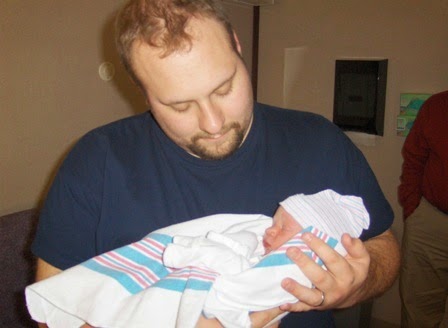
New baby, New Daddy March 2007

Matching jammies, Christmas Eve 2010

Elmo's World!


I paused at the pictures of James, the preschool years.  Part of me "aww"-ing over his cute baby face, but part of me remembering.  I was the person who knew this child best, after spending each day with him, but even to me, he was a mystery.  I spent so much time deciphering gestures and hoots and squeals.  I watched him so closely after the doctor gave him the autism diagnosis, searching for any clue that he'd been wrong, and equally wondering if maybe he was right.  Were James' needs met?  I think so.  But I couldn't be sure; even now I'm not certain if I chose well or completely missed the mark. (Maybe he'll tell me one day.  Kiddo, I'm listening, I promise.)

"James is flying!"

My balloon boys, Fall 2010


Dressed as his second favorite food while collecting his third favorite food
Halloween 2013

I know he liked to be outside.  This was evident even when he was a month old.  Something about stepping through the door from the closed-in, warm house into the chilly spring night air calmed him.  I know he liked to watch Elmo.  From the first time I popped an Elmo's World DVD into the player and that high-pitched fur ball began to speak, my son was riveted.  He quickly figured out the symbols on the machine for play, open, skip.  I regretted exposing him to it when I lost the ability to watch my own shows and movies during the day (a right I am just now regaining...everyone has to be quiet and go play somewhere else so Mommy can watch Downton Abbey!).  James was also a fan of simple $1 pleasures.  A small fry from McDonald's...and OH BOY if we didn't stop at any of the four we passed on the way to speech therapy, I heard about it from the backseat.  Not in words (hence the speech therapy), but his point was clear.  A red balloon from the grocery store...how our trips were transformed from short-term family torture to quick and *almost* easy when we tied that balloon to the front of the cart and plunked him down in the seat.  He would stare up at it, pull on the ribbon, watch it float back up.  I can't even remember when we stopped doing that, when he no longer asked for it by halting and gazing longingly behind the floral counter.

I have heard grumblings in the autism community against the use of the puzzle piece to represent the disorder.  I think one of the points is that a puzzle represents children, who only make up a small percentage of people living with autism (clearly people who haven't done a 1000 piece puzzle like the one I helped my parents complete in December).  But mostly I think it's that the metaphor doesn't hold up.  See, when I do a puzzle, I start out with all the pieces, and the goal is to fit them all together correctly.  When that is accomplished, I have a finished puzzle.  I can see the image clearly, and I'm done.  I used to look at James like a puzzle to be solved.  I was flipping them over, searching for edge pieces, grouping the greens and the purples and the reds and the whites.  I rearranged the pieces and changed my seat and sat back with a cup of tea, desperately hoping that a change in perspective would make a difference.  Lately, Autism Speaks has tried to promote this idea that something is "missing" in autistic people, autism research, the elusive autism answer.  If my son was a puzzle, then that would seem likely.  If my son was something to be figured out, if he would someday be a clear and complete picture, then I would agree that some of the pieces must have fallen on the floor or been eaten by the dog.
My boys: Mikey trying to be like his brothers even though his balance is not as good as theirs,
Winston sitting in the middle not needing his parents' touch
James taking refuge in my arms from the heat and the photo session

But I tend to side with the autistics.  I no longer see my son as a puzzle, nor is it my job to solve him. Instead, as I look back through these photos, I think of a mystery.  Isn't every person a certain amount of mystery to those around them?  What secret memories do they hide?  What unfathomable depths form their soul?  What are they thinking when they tap their chin, look out the window, at this very moment?  The best part of any relationship is unraveling the mystery.  And that's what I am doing with my son.  The little boy in those photos has a terribly choppy buzz cut, because he shrieked so loudly and protested so vehemently every time we took him to a hair salon and the lady approached with scissors, that I started cutting it myself.  It would take a long time, sometimes even an hour, but if I perched him on the bathroom sink and let him splash naked in the water, he would hold his head still-ish for me to buzz off the overgrowth of hair.  It wasn't always easy for me, but it was the only solution I could find.  I don't cut his hair anymore.  Now we look through "Going Places" on the iPad and talk about what is going to happen and then we walk into the hair salon and he sits in the chair and plays some version of Angry Birds and holds relatively still for about 10 minutes while the lady quickly cuts and trims.  And after 10 minutes he begins to squirm and slide and removes his cape and tells me "All done Mom" and I tell the lady "Good work, we are finished" whether she thinks she is done or not and we pay and leave.  Oh, and he gets a sucker.  I fully expect that in another five years, hair cuts will look different from now, just as now they look different from five years ago.  Because unlike a puzzle, a mystery has the ability to change.  A mystery is a fluid, ethereal secret.  A mystery has no end date, no final picture, no completion.  As soon as one question is answered, a dozen more need to be asked.  Sometimes we have to just accept that we can't know everything.  But I understand that there is no easy, pleasant bumper sticker picture to accompany calling our loved ones a "mystery".  Maybe a door?  Or an image from the Hubble telescope of space (I know James would like that one)?
red-door.jpg

Tuesday, December 16, 2014

On Letting People In

James at school

We are revising our son's IEP this week.  It's been five years now that I have been attending these meetings, ever since we wrote the very first one a week before James turned 3.  It's been a journey, to say the least, for our family, navigating the world of autism and special education, and it's made me aware that I am a wall-builder. I have barricades and closets and vaults to keep all of me in, and everyone else out.  But I've been learning these past few years about how amazing it can be to have a community, to have people that are inside the walls.

My initial response upon realizing that my son was different was my tried-and-true coping mechanism of shutting down and shutting out.  I took a lot of blame on myself, and spent long days wondering how I got it all so wrong, how I didn't adequately teach my child how to talk and dress himself, and how could I be trusted to continue raising him and the baby brother who was learning to walk at the time.  I researched speech therapists and attended meetings at school and read books and spent too many hours studying my children, expecting the answer to fix all this to appear.

What I learned is there is no answer or quick fix.  This life is one that requires more of me than I was expecting to give.  But I've learned how to do it.  A big part is sharing the load and letting others in.  The first person I needed to let in was my husband.  In many ways, I had kept him at bay with most of my sensitive areas, and our son became one of those sensitive spots.  I was the parent at home, so it made sense for me to be the one taking James to appointments and filling out paperwork and attending IEP meetings and conferences.  When James was in kindergarten, I came down with a bad case of strep throat the day before the IEP meeting, and my husband had to stay home to take care of us.  I whispered hoarsely to him that he needed to take my place at school, to sign the papers so James would be all set for the next school year.  He looked at me blankly and asked what was going to happen at the meeting and what the IEP was.  I realized I should have kept him in the loop better as I tried to explain with as few words as possible what he needed to do.  I wondered why we hadn't tried to get a sitter so we could both attend these kind of meetings together.  Until that day, I'd carried the burden of helping our son on my own shoulders, but it made me see how much better it would be to share the responsibility and decisions.


It was around this time that we were becoming involved with our Village at church, the people who hold our family so tenderly and support us so completely.  It took a huge leap of faith on my part to share my life with these new people, to trust that when I opened up, they would be able to handle all of our touchy areas with kindness and love.  These days, we have ample opportunity to let people in.  We don't even have to leave our house or get dressed to announce big news and start conversations.  But the problem with social media is that sometimes we don't guard the doors properly.  Some people shouldn't be inside the walls.  Some people aren't safe enough to handle our tender parts.

It reminds me of the book "Generation Ex" written by my friend Jen Abbas (now deJong).  In it, she describes different levels of friendship and trust.  She calls the groups Multitude of Acquaintances, Fellowship Friend, Comfortable Confidant, and Accountable Advisors.  These groups begin to shrink in size from the very large and impersonal (the "Multitude") to the very intimate few (the "Advisors").  This concept has always been a bit challenging for me, since I spent most of my life keeping everything important to myself.  As I've been opening up more, I still have to remind myself to keep certain trusted people inside the walls, and everyone else rightfully outside.  I want to be an honest person.  I want to be truthful and open.  So now I tend towards overshare versus secrecy.


I know I need to learn the balance in what is okay to share and what isn't, especially as a wife and mother who blogs.  I love looking through past years that I've written about; it's a chronicle of what our lives were like then, and an interesting comparison to what has changed.  But stories are mine to tell when my life intersects those of my children?  What will hurt or embarrass them in the future, since what is posted online lasts forever?  At what point does my need to discuss something that I'm feeling or experiencing get trumped by their need for privacy?  One step I've taken lately is to share funny or gross stories in person with people I see regularly rather than posting them on Facebook.  It's more likely these tales will be forgotten when they are only heard by a small group of friends.  I'm also trying to take the advice of Glennon Melton, of momastery.com.  I heard her speak in May, and she addressed this issue as it pertains to her family.  Glennon is a self-proclaimed "truth teller" and her own life is an open book on her blog and in her book "Carry On, Warrior".  Her advice was to stick to our own personal journey as much as possible and to use good judgement when crossing into another person's journey.  Of course, there's always the advice of St. Anne, "If people wanted you to write warmly about them, they should have behaved better."  (This one doesn't seem appropriate for kids, since they all behave terribly at one point or another, and that's just the nature of childhood.  Side note: I really hope at least one of my kids writes about his childhood.  I'm curious to see what role I'll have.)

I write frequently about how my son's autism diagnosis changed everything, in many cases for the better.  Finding the right balance of letting people in and keeping others at a distance definitely falls under the "for better" banner.  We are a work in progress, but work I'm glad to have each day.  Without these little people, I imagine my life would have been less colorful and open.


I'm including this video from Ted talks about "coming out of the closet" because it is a universal idea that is worth sharing in the context of opening up to the people who will help carry our burdens.

Tuesday, September 16, 2014

On Community (not the TV show)

It was supposed to be an uneventful morning.  It was supposed to be relaxing.  But who am I kidding, when is my life ever uneventful?  I got the big boys ready and off to school and then it was time to take the littlest one to the library for story time.  We are enjoying these quiet times together and exploring what he likes independent of his brothers and their dominating interests.  But we didn't just play with the trains and sing songs with Miss Renee.  This morning we met Katie and Scotty.  We were minding our business when Scotty came over to play with Mikey.  He had been reading books with his mom, but decided to get on the floor instead.  Mikey didn't want to share, which made Scotty cry and run back to his mom.  I thought to myself, there is something going on there, and moments later she confirmed.  Scotty was recently diagnosed with a Sensory Processing Disorder and his mom suspects further testing will reveal an Asperger's diagnosis.  He just started therapy and there is so much to work on, she said.  I nodded sympathetically.  I KNOW.  And then I said, "My oldest son is on the autism spectrum."  Words I used to avoid.  Words that brought me to tears every time I said them out loud.  But look at me now!  Casually telling this stranger about my special child.   Because we are part of the same community.

She wanted to talk more.  She told me about her family, how they are not supportive, how they undermine her when her son goes there for the weekend.  So I told her, "You are the mom.  You know your child, you know what he needs.  So do it.  It is hard, and sometimes it takes a really long time to see any progress from it.  But you'll do it."  She nodded and said, "I really needed to hear that."  Katie, I KNOW.  I needed to hear it too.  Sometimes I still need to hear it.  There are a ton of different ways to parent, to be a good mom, and you need to trust yourself that the way you have chosen is correct.  You need to be reminded that your son isn't bad, he's just special.  And that means the way you parent him will have to be special.  You will do it because it's your job.  You will do it because, although this isn't the child you thought you would raise, it's the child that you have, and he's amazing.  It gets easier to see the amazing and stop focusing on the problems as you go.

Can I just say how much more desirable it is to be the one saying "It gets better" than to be the one hearing it? This keeps happening to me, these opportunities to meet newly diagnosed kids and their caregivers, and every time it takes me back (almost five years now) to those days of fear.  I treated my son's diagnosis like all hard things in my life to that point:  I hid.  I buried the truth inside and pulled away. Fear and shame have isolated me for so much of my life, and this was no different.  I was afraid of what people would say, how they would treat us if they knew.  But my silence and my secrets have hurt me deeply.  And so finally I took a chance and reached out.  It was around this time that I met Mandy, who is not part of the special needs community, but took me under her wing and brought me to a literal Village who accepted my whole family in a way I'd never experienced before.  And because of these people teaching me about community, about give and take, about showing up with your mess and letting them wash it clean, about forging a family independent of blood or marriage, I can tell Katie what she needs to hear.  I can be the lifeline that I once needed.  I can offer camaraderie and turn a library into sacred space.

Glennon Melton of Momastery.com says that we belong to each other.  This is true of moms, of special needs families, of PEOPLE.  We need each other.  We need all of our experiences, we need all of the answers we have found, we need encouragement and support and a thousand times over we need to LOVE.  If you are in hiding, COME OUT.  We need your story, we need your passion.  And we just might hold the keys that will set you free.

Saturday, August 16, 2014

Communication and Assumption

"Either it's a hoax, which it isn't, or we are grossly underestimating tens of thousands of people."
                                                     -David Mitchell, translator of The Reason I Jump

It's as innocuous as it is common.  "He talks so well!" people gush over my youngest son.  Mostly because he is small for his age and they assume he's younger and therefore advanced to be speaking in sentences.  No harm is meant, I know, but I cringe every time I hear it.  Yes, it is adorable and humorous and downright helpful when our children learn to talk and begin expressing themselves.  But I'm also the mother of a child who doesn't talk well, who has never been gushed over by strangers.  I struggle because every day I'm confronted with this misplaced belief that verbal communication equals intelligence, that a child who looks away and makes sound effects when asked a question must be less smart, less capable than his brothers who are able to engage in conversation.  But it's simply NOT TRUE.

All of my children are beautiful, smart, capable, lovely people.  They each possess skills and they excel in certain areas, just as they struggle in others.  But if they can communicate in the way we understand, in the language and social context that most people use, then they are perceived as having worth.  Yet words aren't the only means of communication.  Often words are the least reliable way to communicate.  There is behavior.  There are gestures.  There are emotive sound effects and pictures and facial expressions.  And this is why autism awareness and acceptance are so important to me.  Because my wonderful son belongs to a group of people who are continually underestimated and deemed unworthy of time and expense and humanity.

This is something that I have learned over the years, as I have read and searched to understand my son.  I first found it in the works of Temple Grandin, whose memoir is aptly titled Thinking in Pictures.  She doesn't think in words, but sees pictures instead.  Another author, Daniel Tammet, describes numbers as a series of images.  His book, Born on a Blue Day, is full of illustrations.  Just recently I finished The Reason I Jump by Naoki Higashida, who describes memory as a circle and it finally clicked into place.  For James, words are a second language.   There are some days when he speaks very well; his words are plentiful and his expression is clear, and on those days it is all so blessedly easy to understand each other.  So why are there other days when he doesn't seem like he wants to talk at all?  Why does he respond to me differently and return to his large vocabulary of sound effects?  Because that's his first language.  When he uses movie quotes instead of his own words, it's the emotion behind them that he is trying to express.  How I wish I could be inside his head on those days, to really understand what it means to think in pictures or circles or colors.  It reminds me of my trip to Europe.

My dad loves to tell this story, although he wasn't there, and when he does it makes me feel very stupid, which is not a fun feeling.  After flying into Germany and spending a few days with friends there, my mom and I took a train to Paris.  It was the end of a long day of travel, of navigating a new city to secure a hotel for the night, of arguing with my mom, and finally we sat down in a restaurant, ready to eat and relax.  We perused the menu (in French) and I tried my best to translate for my English-speaking mother.  We placed our order, but Mom was displeased when the food came out and our waiter placed a raw beef patty in front of her.  She looked at me in alarm and said, "I'm not eating that."  And so I turned to our French-speaking waiter and opened my mouth to explain, only the words wouldn't come.  I had studied French for years, to the point that I was fluent.  Sometimes I even dreamt in French.  But we had just been surrounded by German, a language I am familiar with, but not as well, and I was tired.  The meat needs to be cooked, I thought in English.  Kuche, I thought in German.  Hot, in English.  Kitchen.  Pan.  Skillet.  My mom was getting agitated that the raw meat was still sitting there, the waiter's forehead was creasing deeper, and I could not for the life of me think how to communicate in French.  I want to say that it took hours to sort it all out, because that's how long it felt, but it may have only been five minutes.  Eventually, the meat was taken back to the kitchen and returned a nice, brown hamburger, and the rest of our stay in France went smoothly.  Now I ask you, am I stupid?  Because, of the three languages I was capable of speaking in that day, the only two that came to mind made no sense to the waiter?  Or is mastery of language a tricky skill for anyone, and in moments of distress, difficult to access?

Naoki Higashida was 13 years old when he wrote The Reason I Jump, and was described as non-verbal.  Meaning he was unable to speak to communicate.  Yet he could write a book that was both creative and informative when given the right medium to do so.  It makes me wonder how much uncovered potential my own autistic child possesses.  And beyond our own community, it makes me wonder how this narrow view of communication affects other people who don't speak well, people whose voices are limited due to physical impairments like being deaf.  What are we missing by not seeking out and supporting those who aren't like us?

It was a huge deal the first time James told me he loved me at the age of six.  Of course it was.  But it wasn't new information, just a new way to communicate.  He had told me thousands of times that he loved me, by touching my face, by kissing my cheeks, by inviting me under his dark blanket and showing me his toys, by sitting on my lap, by sleeping on my lap, by holding my hand, by running into my arms when he was scared, by pointing out fans and dogs and the moon.  When he said, "I love you Mommy," it took all my strength not to say "I know" and inwardly exult in my Han Solo moment, but to say, "I love you too."  And as much as I love hearing him speak my language, as important as it is for him to learn these words to succeed in this world, I'm learning to speak his language too.  Because the best way I can say "I love you" is to meet him halfway.

This is a link to a website that features Naoki in a video entitled "I Write, So I Am Alive", as well as other videos explaining Facilitated Communication.  Watch, it's fascinating! http://soe.syr.edu/centers_institutes/institute_communication_inclusion/about_the_ici/Videos.aspx

Thursday, March 20, 2014

On Eugenics

When I was a flight attendant, I had the opportunity to observe all types of people.  Every so often, someone would hug me.  The huggers had one thing in common: they weren't harried businessmen (those guys whipped out their cell phones as soon as possible and were already deep into "important" discussions by the time they passed me), or parents (fumbling to carry all the accessories for their little kids)....all the huggers had Down's Syndrome.  The only group of people I met in all my travels who didn't care that I was a relative stranger, that weren't upset at the seat they were assigned, who weren't rushing to their next gate or destination.  There are tests that can be performed on pregnant women to let them know they are carrying a child with Down's, and 70% of women who receive this diagnosis set up another appointment to terminate their pregnancies.  There is no test that can let a mother know she is giving birth to a future serial killer, to a man who will someday rape a woman or embezzle millions of dollars.  There is no way to guess if a baby will grow up to be someone horrible, who will make this world a worse place.  But that test that detects trisomy 21 (aka Down's), it doesn't just tell us that our babies will look a little different or have heart problems or cognitive delays...that test also indicates that a woman is carrying a person who will bring joy and laughter and unabashed dancing into the world.  The kind of person who hugs their flight attendant.  The kind of person who sees and lives a little differently.  Yet that's the one who gets aborted.
James, before diagnosis
My son James was three years old when he was first labeled with the word "autism".  It was the first time I perceived anything different about him.  What if there had been a test, a routine part of pregnancy for a healthy 24 year old woman like myself, that would have revealed what the future held for James?  What if I had been given a choice to end it before it even began, and what if that choice was informed only by statistics and words like perseveration and nonverbal and out of control and institutionalized?  What if someone had told me then how hard it would be sometimes, how much thought and worry and struggle would mark our lives?  My choice back then would have been affected by an extreme selfishness...the kind that is eradicated when you care for a child with special needs.  Instead, I proceeded in ignorance, I gave birth not knowing.  For three years, I cared for him, fed him, studied him, engaged him, cuddled him.  I fell in love.  And so, when the doctor used that word, that scary label that seemed to imply that he was less than what he should have been, I took my beautiful boy and walked out of his office. (If I was a less polite person, I might have given him the finger)  I should clarify, we followed the advice of the other professionals who evaluated James: he began speech therapy and attended an early intervention preschool.  I became a student of developmental disabilities and sought out solutions to make this world more liveable for him.  And while autism affects his life, it isn't all that he is.  He is kind.  He is silly.  He has a terrific memory.  He loves nature.  He is a great driver (in video games at least).  For the past two years, he has exceeded the goals set for him by his teachers.  And it is thrilling to hear our celebrations of all he has accomplished drown out those warnings the doctor proclaimed over his future.  My son isn't perfect, but he is precious, and he has changed the way I look at people.
James, after diagnosis

 My pro-choice friends have been vocal and clear about why they believe in abortion rights, and I would just like to take a moment to explain why I feel differently.  I say CHOOSE LIFE.  Because abortion is the end of the story.  That's it.  You won't face the difficulties that you would have if you had given birth, but you will miss out on the joy and wonder too.  I say CHOOSE LIFE.  Because even if you are a parent for a day, a week, five years, twenty-nine years, or until the end of your days, it's worth it.  There is no other experience on earth that comes close to it.  There is no artificial re-creation of it.  I say CHOOSE LIFE.  Because that child that you can't imagine raising, who may seem like a burden, to me he is a wonder.  I belong to a special group of women (we call ourselves "adoptive moms") who literally ache to hold that child in our arms, to nurture and raise and love him.  If you can't do it, friend, we will.  And so again, I say CHOOSE LIFE.


Sunday, December 1, 2013

In the Stillness

At peace in the quiet of a snowy day

Things have gotten crazy once again.  Every day, the activity in our house ramps up until 8pm.  Its a steady beat, like a primordial drum calling the children to be louder, louder, run faster, faster, until we separate them for baths and jammies and stories, and they finally settle down for sleep.  I get caught up in the busyness.  Sometimes I am running with them, dancing and throwing or shouting at them to keep it down, how's a person supposed to think?!  But whenever I need a break, whenever it has become too much, and whenever Chris is there to handle the clamoring hoard, I go look for James.  Because no matter how many kids are here, how much noise is being made, my sweet boy has usually found a quiet corner for himself.  I join him there, in the stillness, and he helps me quiet my raging insides.  It is usually soft, with blankets or sleeping bags or pillows hiding a hard surface, and dark, with shades down and lights off and a nice dark blanket pulled overhead like a cocoon.  There is no music, no chanting monks, no TV or video games or laugh track.  Sometimes he will arrange his body so that he can lay his ear against my stomach.  I think about what he is hearing, the gurgles and splashes of fluids following that downward course we learned about when the Magic School Bus went inside Arnold.  Sometimes he wants me to read to him.  And so we look together at the stories about starfighters and pigeons and Lego cities.  Sometimes, when the mood is just right and the day has been successful and I've quieted enough to really listen, we have a conversation.  A real, honest-to-goodness chat, with the whole back and forth, question and answer thing that other people seem to come by so easily, but for him I know is the hardest thing he will ever do.  They are never long, our voices are always hushed, and an errant child storming in will inevitably bring about its end.  But I cherish our time together in his quiet space.  He finds and protects it with all the tricks in his bag.  And I wonder at this ability he has, to be so still, this meditative silence that I could never achieve even back when there was no one else around and no big answers to find, no matter how hard I tried to shut it all out and just be.
Finding a quiet place at the park to throw stones 

He's always been this way, from the moment he was pulled into this loud, hectic world.  I just never knew why.  Why he would fuss in the house, with the tv on or people over, and when we stepped outside, into the void of a summer night or winter afternoon, he became still and peaceful.  We've always been fortunate enough to live on quiet streets, with a decent distance between our house and the neighbors, so that the only sounds we hear are the birds in the trees or the occasional plane flying overhead.  We've spent so much time sitting on our front stoop, laying on a blanket in the yard.  I slow my breathing, taking deep pulls and filling my lungs, and then slowly exhaling.  Sometimes outside isn't a haven of silence, and I remember so well the Christmas we were at my parents' house, opening gifts and laughing with my sister and her husband, and James, almost three years old, took refuge in the curve of the sectional couch.  He covered himself with a blanket, and when we peeked in at him, saw that he had gathered balled-up wrapping paper to give a sound-proof layer to his hideaway.  It all began to make sense once we learned about sensory processing, overstimulation, why the times when many of us are happiest, surrounded by our friends or loved ones and talking and making quite a big noise send him into a tailspin.  And so this is another aspect of special needs parenting which we have continued to get better at as the years progress: we give our son what he needs.  We attune, we learn, we listen and he tells us how to make these times better, how to get through the holidays or the afternoon or the church service together.  I realize that I've gotten more comfortable in this role, more confident that I can give him what he needs, that we can experience life as a family and not hide out all day.  If it takes noise-muffling headphones or a thick quilt or a walk around the block, I will make it happen.  This is the gift that autism has given us, the opportunity to be still.  Too many times we focus on the difficulties, the challenges, but truly TRULY I feel blessed to have a child who needs and creates this stillness for us all, and I am happy to join him in it, to practice more being and less doing.
http://adiaryofamom.wordpress.com/

Friday, November 22, 2013

Thinking about Autism: In the Wreckage


When my son was diagnosed with autism at the age of 3, I was devastated.  I had only encountered two other people with this condition/disease/disability...I didn't even know what to call it.  The time I spent in denial and feeling defensive didn't help anything.  It didn't push me into action.  It didn't help me understand my son any better.  I felt like a ship at sea, going under in a terrible storm, with every thing, everyone, on board lost.  It took other autism moms to get me to face it all head on and start my journey of autism awareness.  And it took community and the realization that I wasn't alone to accept autism for what it is-- a part of my son that affects him but doesn't define him..  After opening myself to the greater autism community, I found out that most parents are wrecked by this diagnosis.  But I also learned that sometimes life needs a little wrecking.
I drive by houses like that sometimes.  They are falling apart and just look dangerous, and yet there are cars parked out front and lights on inside, and I wonder, Who would live there?  Why would you make improvements or cosmetic changes?  Why would you invest your money in it, or force your family to live in it?  And I think its like the abandoned "plan" for my son.  This is what I thought he was going to be, to do, to become.  But its not, and so instead of inhabiting this crap shack, I needed to just BURN THE MOTHER DOWN.  Raze it.  Instead of asking, Why is this happening?  What made him this way?  Because those questions don't serve a purpose, and might just be the complete wrong questions to ask.  The mental spiral that kills hope and joy?  THROW IT OUT.  Standing on the now empty plot of land, I finally asked the right question: What now?  It was time to take the materials I'd been given, my wonderful and amazing and unique son, and find out what he was.  Maybe he would be a new house, or maybe he'll be a grocery store or post office, or some piece of abstract art that makes everyone who looks at him think something different.  Who knows?  There is no "right" answer, no final destination that he has to arrive at, no timetable that I can impose on him.

When the doctor said that word, the dreaded "A" word, and the teachers and therapists and well-meaning friends confirmed it, the plans and dreams and goals I had laid out for my son imploded.  And thank goodness.  Now he gets to be the author and architect of his future.  Instead of pushing him to be the person I want him to be, I'm watching to see where he shows interest and ability.  I'm still presenting opportunities (come on kid, let's learn French together! It'll be fun!), but I listen when he says NO.  We have left the wreckage and are living in the new creation, the life that happens when we rebuild what was once thought to be lost forever.

Wednesday, November 13, 2013

This is My Son

We've all heard the phrase, "God is a mystery."  And its true.  There is so much that I don't understand, that I don't get, so much that just completely baffles me about this guy who is the Lord of the Universe.  But sometimes...sometimes the words jump out at me, and they are so true, and so in tune with the language of my heart, that the doubt is pushed aside and I fully worship this God that I love.  God sent us Jesus, His Son, and when Jesus' ministry began, when he was baptized by his cousin and started to live the life he had been sent to live, "A voice from heaven said, 'This is my dearly loved Son, who brings me great joy!'"  Oh God.  I get you so much in that one sentence.  I know how you looked at him, I know how your heart swelled with tenderness and love because He. Was. Your. Son.  I know those feelings, because you blessed me with three sons, and each of them brings me great joy.

James
This is my dearly loved son, who brings me great joy.  When I look at him, I see bright eyes and a strong body.  I see the child who made me a mom.  I see an amazing big brother.  I see a boy whose brain is wildly, wonderfully different from mine.  And maybe having that difference makes you think that he is a challenge, that my life is harder or less enjoyable because I am his mother.  Maybe you hear the word "autism" and a myriad of behaviors or disabilities cloud your vision.  Maybe you think it makes him less...less of a person, less important, less intelligent.  But you would be wrong, on all counts.  Because I consider it my great privilege to watch and raise this child, to learn from him just as much as he is learning from me.  Because I chose a while back to CELEBRATE my son, to cheer his accomplishments, at whatever rate they happened.  To be his safe haven in a world that doesn't "get" him.  To cherish every hug, every kiss, every cuddle. (to pause blogging and read a book about starfighters with him)  To stop comparing him to other kids, and focus on what makes him uniquely HIM.

James and Winston
This is my dearly loved son, who brings me great joy.  Because my first child gave me a new sense of purpose, a title and a role that I never thought I would be good at.  So I said, Let's do it again.  And he was worth the uncomfortable pregnancy, the expansion that took place in my body so that it would never return to its previous glory.  He is bright, and open, and full of life.  He is a performer, who will repeat himself over and over and over if he gets applause or even a laugh the first time.  He loves to watch videos of himself, and finds them more entertaining than any DVD in our collection.  He is bossy, and a perfectionist, and can be very emotional.  I consider it to be my great privilege to watch and raise this child, who learns from his big brother every day, who wraps his arms around me and says, "Oh Mommy, I love you!  You are so beautiful!  Hug me tighter!"  Who takes off his clothes at any opportunity, and shows the world what God gave him.

Winston, Michael, and James in a fire truck
This is my dearly loved son, who brings me great joy.  From the first time I held him in my arms, I wanted him to be mine, and mine alone.  But he has shown me how much room a human heart has, space for two moms and two dads, for two brothers and three sisters, for cousins and aunts and uncles and grandparents ad infinitum.  When I look at him, I see her.  I see his first mom, the one who gave him life, who left him with me, who has no idea just how amazing her child is.  And when I look into his blue eyes, the beautiful eyes they share, I pray for her.  I pray that she is safe, that no news is good news, that someday she will come back to him.  So she can see how much he loves trucks and action, but also what a tender nurturer he has become.  So she can see his short little legs pumping and swinging to keep up with his big brothers.  So she can experience his smile, his frequent kisses, his possessive occupation of laps.  I consider it to be my great privilege to watch and raise this child, to soak in all these moments and tendencies, to watch over him in her absence.

These are my dearly loved sons, who bring me GREAT JOY everyday.

Wednesday, August 28, 2013

My Fear

"So the good boys and girls
Take the so called right track
Faded white hats
Grabbing credits and maybe transfers
They read all the books but they can't find the answers."

I went to that cookie-cutter high school John Mayer sings about, the one that teaches the equation abc=xyz, with abc being Take these classes, Get straight A's, Graduate with honors, and xyz, you will Get into the top college of your choice, Graduate summa cum laude, and Get the best job ever.  And that's it, that's the meaning of life.  But I was lucky, because my parents didn't believe in conveyor belts, and they encouraged me to chart my own course.  They never shied away from being "weird" or different.  If I wanted to take a class that went away from the mold, they said do it.  If I liked reading science fiction novels instead of the "classics" required in AP English, they said drop the class.  If I wanted to wear clothes from Goodwill or my grandma's attic, they shrugged and went on with it.  They showed me how to figure out exactly who me was, with no right answers, no strict guidelines.

Well, I never lived the dream of the prom kings
And the drama queens
I'd like to think the best of me
Is still hiding up my sleeve

Sometimes when I mention something that my parents did really well, they'll scoff and say they weren't doing it on purpose.  They were flying by the seats of their respective pants, with no map to show them where to go.  So maybe it wasn't sheer bravery that caused them to let me be weird.  Maybe they were just clueless about what they were supposed to be doing.  But isn't that courage in and of itself?  To plow ahead, not looking to the side to see where the other parents are, if they are on the right course or headed for a cliff, to push me into the wide open world instead of on a narrow path to the Ivy League?

"I think what must have frightened my parents most 
of all [about my diagnosis] was the possibility that I would
not be able to lead the "normal" life they really wanted for me.
Like many parents, they equated normality with
being happy and productive."
Daniel Tammet, Born on a Blue Day

So why then, coming out of a home that placed so much importance on individualism, have I become that parent who is constantly checking what the others are doing, wondering if my kids are missing out, not measuring up?  Because I'm afraid.  I'm scared that my kids will show up at school reeking of different, and that will lead to bullying, low self-esteem, resentment toward me.  If they haven't had swim lessons by age 5, did they miss out on important childhood memories?  If I buy their shoes for $4 at a consignment sale, will other people be able to tell?  If our idea of family fun is eating popcorn and watching movies, if I buy them Skittles or let them drink Sprite, am I setting them up for obesity and isolation?  I just want to fit in, to blend in the crowd so my kids will be safe.  But that's not good parenting.  I know it isn't.  I was taught from such an early age to do what is best for me, to clear a path if none existed, to go where I need to go.  And why should that be any different for my kids?  I confessed this to my friend, and she laughed and said, "Oh, you SO don't fit in."  Wow, and that was when I was trying.  So I decided to shut out all the noise, all the websites and commercials and statuses that made me feel like I wasn't measuring up.  I called to mind John Mayer's young adult anthem, the song I identified with so well as a 19 year old nontraditional student.  Because my boys don't fit in boxes.  They are so much more than a list of grades or accomplishments or failures.  They are little people with passions and hopes and dreams.  And I want them to learn what I learned, how to create a life of one's own choices, how to arrive at one's own destination.

I wanna run through the halls of my high school
I wanna scream at the top of my lungs
I just found out there's no such thing as the real world
Just a lie you've got to rise above

Sunday, April 7, 2013

This I Believe


" And we are not perfect.  We say the wrong thing.  We grow and we change and the words we spoke in the past are words of which we now repent, but that is the nature of sanctification and there is no one exempt from that process."  -Fabs Harford

I believe that words are important.  I believe that what we say and what we write can affect people, and it is our choice to encourage and build people up, or tear others down with our negativity.  So often, as I was growing up, my parents would admonish me to THINK before I spoke, usually as a follow-up to something insensitive or inappropriate that had just come out of my mouth.  I would sigh in exasperation, because the challenge to evaluate all spoken words before enunciating them, and discarding the unnecessary ones, seemed too much for me.  I didn't want to stop long enough to consider my words, I wanted to get them out, to share them with others and join in.  People gave me labels: I was cynical, sarcastic, jaded.

I often wrote as I grew up, I filled notebooks with thoughts and observations.  I still wonder if anyone is ever going to read those words or if they will get thrown away at some point, without being seen by the world.  I want to have influence, I want to share my mind and my feelings, but I lack the confidence that I have anything worth saying.  Then I started a blog.  I began not knowing what to write, and the first year I think I wrote 3 entries.  My husband was the only one to read them.  The next year I posted just once. 

It was surreal to find myself, this lover of words, the mother of a non-verbal child.  I yearned for the day I would hear him speak, when we could converse and share our words and learn more about each other.  It didn't come.  The doctors and the speech therapists and the educators all told me the same word: autism.  They gave other words and phrases, like developmental delay and no imaginative play and isolated and early intervention.  We started therapy and preschool and while he struggled to find his voice, I did too.  I couldn't figure out how to tell people what I was coming to terms with, the reality of having a son with a "disability".  I found myself dropping out of the mom-petition, avoiding playdates and birthday parties and listening with jealousy as the other moms compared their children's milestones.  I wondered if my child would ever use a toilet, make a friend, learn to read or write his name, much less play on a basketball team, speak Spanish, or write a play for his third grade class to perform.

I was scared for my son to receive an official diagnosis.  I was afraid of that word, afraid of what being associated with that word might mean for him.  Would he become a target of bullies?  What other words would they call him, when they saw him riding the "short bus" that is no longer short?  How many times had I made jokes at others' expense, how many times had I declared something "retarded" in my adolescent speaking-before-thinking phase?

But I came to realize its not a word spoken by a doctor in a white coat that I am afraid of.  Its what we are teaching all of our kids about words and about how we treat people who are different from us.  And that's when I found my voice.  I began sharing my opinions and stories and family with the internet, simultaneously afraid that no one would read and afraid that everyone would.  I found, through blogging, that I could form my words, gather my thoughts, and take the time to present an idea without being offensive, hurtful, thoughtless.  Although it can often be a place where people comment without any regard for the fact that a person is on the other end, reading their words, for me, the internet is the place where I finally learned to think before speaking.  I can look at a person's profile picture, I read about their struggles and hopes, and I take my time forming a response.  My hope is that what comes out is different, so that people perceive me differently.  So that they use words like "loving" and "encouraging" to describe me.

Another benefit of speaking boldly for my son and others like him, is that he is now finding his voice.  He is speaking and learning to read; he is expressing his needs and communicating to others.  One of his favorite stories is The Lorax by Dr. Seuss.  I love to hear him loudly proclaim, "I am the Lorax...I speak for the trees, for the trees have no tongues."  Where I once saw myself as speaking for my silent son, now I wonder what voiceless, invisible group he will speak for. 

Tuesday, April 2, 2013

Autism Awareness

 
April is Autism awareness month...but in my house, every month is Autism awareness month.  Every day of my life is affected by autism, because my son is living autism.  Sometimes it feels like a burden to educate everyone he comes into contact with about his "condition", his "limitations".  Don't get me wrong, I appreciate every single person who cares enough to drop down to his level and ask him questions, those of you who try to involve him in the church programs and the play groups.  But some days I just want him to be able to play and spin and make weird noises and have that be normal.  That's why I love being around other Autism families.  Because the high-pitched shrieks and constant motion don't stick out so much when five or 10 or 50 other kids are doing it too.  I've been finding my people, these other families who know how it is, by doing the Autism Speaks walk and attending Sensory Storytime at the library.  The kindred moms who chaperone the field trips and join the online community through facebook and blogs.  I didn't realize how isolated I felt until I found them, and jumped instantly into the alphabet soup shorthand of special needs... OT and IEP and ADOS, IDEA and DD and SPD.  Our experiences are varied, yet the same.  Does your extended family understand what you're going through?  Do they try to help?  What about friends, neighbors, coworkers?  Do you feel like your child's teachers and therapists are allies or adversaries?  Do you like your doctor?  Do you feel like crap after IEP meetings and parent/teacher conferences?  Do you doubt yourself?  Do you wish your child was "normal" while also loving what he's brought to your life?

Oh yes.  These people get me.  But in honor of this fantastic blue month, I want to share three things I've learned as an Autism Mommy that maybe you don't know.  They are the three things I wish I'd heard from the smug neuro who leveled us with a diagnosis and an indifferent attitude about how our lives would be different from those of the typical families.
What the doctor should have said:
1.  If you've met one person with autism, then you've met one person with autism.  I hadn't experienced much first hand before becoming a mom.  I only knew one person for sure that I'd interacted with who was autistic.  My son is almost nothing like that other boy, except they share a medical diagnosis.  Never assume what an individual is capable of based on one word.  Because its a "spectrum" disorder, these people are all over the place in terms of skills, knowledge, communication, interests...but they are all people, all worthy of love and freedom and life.  Which leads me to...
2.  Different, not less.  I can't even say these words out loud without crying.  They mean that much to me.  My son is ABSOLUTELY different from typical children; he knows it, they know it, anyone spending five minutes with him knows it.  But he is in no way LESS of a person, less worthwhile, less loveable.  He is a circle to his brother's straight line; he is a square peg in a world of round holes.  His mind is a mystery, even to me, the one who birthed him and carried him and spent every day with him, but it is a joy to discover how it whirs and contemplates and makes sense of this life he's been given...
3.  Watch and learn.  Too many doctors give a "prognosis"...fancy medical term for incapacitating fear instilled in parents without much basis in reality.  We sit in the sterile rooms and look at the framed diplomas and imagine these men and women to be masters of the body and conquistadors of the brain, and when they say horrifying things like "Your child will never talk" or "Your child will never be able to have a real friend" or even something completely absurd and incalculable like "Your daughter will never go to Prom", we listen.  We readily accept as truth something that NO ONE has any way of knowing.  Remember #1 on my list?  Yeah.  So when you meet an autistic individual, especially when you parent or grandparent or are an uncle or aunt to someone like my son, put it all out of your mind.  Just pay attention.  Become a student of your child, just like any other parent does, and you will learn their triggers and their shortcomings, yes, but you will find out so much more.  You will see fans where you never noticed them before, you will be aware every time a school bus passes, you will see a snake not as a horrifying predator but something to be stroked and loved.  You will see a boy in a wheelchair and look beyond the disability to see the beautiful person inside.  You will notice every time another person cries, whether it is your baby or a stranger, and you will feel distress because that person is sad and you can't take it away.  You will know where every McDonald's is in your county, and you will shake your fist at those all-too-visible golden arches and wonder why there are so many.  You will realize that the only worthwhile part of cupcakes is the frosting.

I hope I can educate people and dispel the myths surrounding people like my son.  I am so grateful to the other moms and dads who share their everyday experiences and moments of transcendent wonder in ways that are poetic and informative, and I will keep striving to achieve that here (someday!).  And now I leave you with the immortal words of Ms. Jamie Lee Curtis:
"Different means nobody's ever the same.
All bodies are different and so are all brains.
Different is what makes this world so great.
Different is never something to hate."

Wednesday, February 20, 2013

Accepting the Autism


Three years ago, my family traveled to Children's Hospital.  It was the final stop on our journey, our quest to find an answer.  Why didn't my almost-three-year-old son talk?  I knew what they were thinking, the direction the other experts were leaning as they evaluated his speech, his motor skills, his ability to follow directions.  But I so desperately didn't want that answer.  I didn't want to hear the dreaded A-word.  I did so much research, so much preparation for our meeting with the Pediatric Neurologist.  I noted all the ways my son did not fit the descriptions (and ignored all the ways that he did).  But there we sat, in that small exam room, and that smug doctor said, "Your son has autism."  I argued with him for a while.  I presented my case.  Chris took James to the waiting room to look at the aquarium because he couldn't wait in that space any longer.  Finally, the smug doctor said, "I can tell you're very intelligent and you've read alot on this subject, but I've been doing this for 30 years and have yet to be wrong."  Oh, I wanted to smack him.  He didn't understand what he was doing to us.  He didn't understand how grave his words were.  I gathered my papers and left.

Until then, my experience with autism had been very limited: a one-time viewing of Rainman, the strange boy from my high school who flapped his hands as he walked down the hall, and Andrew, the 11 year old boy I babysat.  None of these instances reminded me of James.  For one thing, they were all verbal.  James only said a handful of words, and he hadn't added any new ones for more than 6 months.  Most of my denial rested on Andrew, the one I had the most direct interaction with.  I watched him every Saturday morning for more than a year, and I'm pretty sure he never learned my name or even noticed when I stopped coming.  He would sit, rocking, and recite the TV guide.  Rarely did anything actually happening in his general vicinity show up in his speech, nor did his tone ever fluctuate with emotion.  We never conversed.  On the other hand, my darling son, with whom I spent every day, was cuddly, affectionate, and happy to see the people he loved.  He cried whenever we left him, or if his Nana and Grandpa were headed out the door.  I never noticed him doing any odd "stereotyped" behaviors, like flapping, rocking, spinning.  Most importantly, he looked at me.  In the eye.  Sometimes he sat on my lap and we stared at each other.  The autism community has many helpful phrases, one of which is "If you've met one autistic person, then you've met one autistic person."  In other words, despite having the same diagnosis, each individual experiences it differently, unlike the time four of us had strep throat, and we all had red tonsils and took antibiotics.


My biggest fear in receiving the autism diagnosis was its permanence.  I knew enough to realize that it wouldn't go away.  It wouldn't be cured.  It would be with us forever, and there was no way to predict how severely it would affect not just James, but our entire family.  I had more concerns when I read the doctor's folder of information a few days after our visit.  People with autism do not feel empathy.  They lack imagination.  They can't show emotion.  If there were ever to be a basic list of what I want for my children, at the very top would be that they would feel love and would care for not just themselves, but the people around them.  That they would know the wonder and joy of the human imagination, where there are no limits.  And these pamphlets threatened to prevent my darling child from experiencing any of that.

So for a while, I struggled.  We followed the experts' advice: we enrolled James in an early intervention preschool, and that summer we began private speech therapy.  I kept hoping that somewhere along the way, someone would correct this mistake.  They would look at James, really engage him, and say incredulously, "Your son doesn't have autism!  He's just ----."  And whatever that ---- was would have a clear and simple solution.  If he would just start talking, he could explain to them all how wrong they were!  I became more intentional at home, reading more books and using more words to describe what we were doing.  I made flash cards and posters.  James wasn't too interested; I usually ended up with just 1 year old Winston filling the place his older brother had vacated.  I also spent nights beating myself up.  I just couldn't imagine that this wasn't all the result of some terrible failure of mine.  I would go over and over my pregnancy, my delivery, his first few years.  What could I have done so wrong that my child didn't develop the way all his peers seemed to?

The only thing that seemed to help me face what I was denying was time.  As the days and months and years went by, and James met more and more people, and none of them ever said those magnificent words.  As I spent more and more time finding out about Autism, meeting other parents and children who faced it.  It became harder and harder to ignore what was there.  My son is autistic.


The truly amazing thing happened once I accepted the diagnosis.  Once I said it out loud, and believed it in my heart.  That's when I started to let myself off the hook.  That's when I started to look for the hidden blessings in this new reality, the abilities in my son's disability.  And that's when I realized that James isn't Autism.  James is a boy who loves to play Angry Birds, whether on the iPhone, with his plush birds and some blocks, or those tiny rubber Angry Birds.  James is an older brother who gets territorial when the younger ones try to mess up his stuff, who kisses the baby when he cries, who hugs fiercely when he gets home from school after being away from them all day.  James is an affectionate and empathetic person, who gets distressed when others are upset, who smiles expectantly and wants to know the joke when people around him laugh, who gives kisses and high fives to the people he knows well.  And most importantly, he's my son, my cuddle buddy, my special boy.  I couldn't separate him from Autism any more than I could make him be outgoing, or suddenly make him Asian.  But all of his characteristics and personality and neurological differences add up to the awesome person who is my James.

Tomorrow morning, we're heading back to Children's.  James will be evaluated to be given an official "diagnosis", a place on the spectrum.  I'm not fighting the experts this time, I'm not even hoping someone will say, "He's not autistic!" (because, Good Lord, what do we do with that?!)  But I also don't really care too much what the results say.  If his school, his doctors, his teachers and therapists need to classify him to make their jobs easier, if they need to call it something, then so be it.  But to me, he was, is, and will always be my son, and I will call him James.

Wednesday, February 13, 2013

Feelings

We had a parent-teacher conference in November, which was wonderful because we got to hear about all the thoughtful and understanding ways James' teacher reaches him.  How she uses visual cues to help him order his day and learn new concepts.  She recommended that we get an iPad to use at home, because there are so many apps that can help autistic individuals get through life easier, and encourage them to work on new skills.  It was a nice idea, but a pricey one, and also one without any evidence to back it up.  Okay, we could spend hundreds of dollars on a therapy tool, but what if he doesn't respond to it?  What if he just wants to play Angry Birds like he does on his Nana's iPad?  With money being always tight in a single income home, I didn't see how it would be possible.  Then Christmas came, and with it, a gift.  A great big check from Grandpa for whatever we wanted to purchase.  So, okay, we decided to get the iPad, knowing that we would all enjoy its many uses if James ignored it.  I should have known.  My husband obviously did, because he followed up the purchase with nights researching the best apps, and compiled a list.  We went through it together, after the boys were in bed, thinking about what James needed, and where he is going.  The most important was the Visual Scheduler.  An app that lets you compile lists of activities and tasks to be done, complete with pictures and sound.  Example: My Nighttime Schedule...First I can Go to the Bathroom, Brush My Teeth, Put on Pajamas, Read a Book, Listen to Music.  Each icon can be moved to the other side of the screen and the iPad says "All done".  This particular list works wonders when the response to "Time to brush your teeth!" is met with a very emphatic "No."

The visual schedule has another function called a Feelings board.  I went through and made one for each of the available emotions: Happy, Sad, Angry, Frustrated, Tired.  When James got strep throat and refused to take his antibiotic, I added Sick.  Example: When I am sick I can Rest and Take Medicine, then I can have a snack and Watch a DVD/Video.  Once again, complete with pictures and sound, we watched the Sick board each day, then explained that taking his medicine calmly meant he could have a treat...a brownie, some candy, fruit snacks.  It helped, although he still hates medicine.  When the antibiotic treatment was finished, and he was told "All done", he broke out into the "We did it" song from Dora.  But he sits with his iPad and memorizes these lists.  I hear him reciting them in the car, at bedtime.  Whenever his baby brother cries, James says, "Michael is sad.  Cry, have a hug," the options he has been given on his feeling board.  Not only is he recognizing this emotion, in both his brother and himself, but he remembers what he can do, and frequently says, "I can cry" through his own tears when something upsets him.  But the best use the feeling board has gotten happened when I was distractedly texting and he wanted me to get a toy that was out of reach.  I heard him ask, and gave the "In a minute" mumble.  We went through this a few times, as he doesn't usually let up once he has a request.  I kept focusing on the phone (not my finest parenting moment), until he opened the iPad, pulled up the app, selected "When I am Frustrated", and kept tapping the icon, so that "frustrated frustrated frustrated" finally got my attention.  I had to laugh.  I appreciate his tenacity, and also his creativity.  When one way of requesting his toy didn't work, he found another.  And yes, I put down the phone and got the toy.  I should have done it sooner, but then I would have missed his masterful display of the Feelings board.

Another Feeling is Anger.  When James is throwing an all-out, I am losing it, marathon tantrum, he likes an audience.  He likes to rage and cry and hit in whichever room has the most occupants.  This sets off Michael, who doesn't like seeing his big brother upset, and usually the duet of screaming gets to Winston, so that we have a meltdown times three.  Which is great because children crying never gets under my skin *sarcasm*.  To prevent our house from exploding every time James is upset, we have been trying to teach him to go to his room.  Alone, he can rage, he can throw stuffed animals, he can stomp his feet.  Its been hard to get him to stay in there, however, and if I'm home alone, I can't very well leave the younger two unattended while trying to help James come down.  So now the iPad helps him understand what he needs to do. 

Last week, when I had a temper tantrum of my own, I tried to explain it to him.  "Mommy is angry.  Mommy needs to be alone and stomp her feet.  Then I can have a hug and have special time with James."  He repeated my words, but didn't leave me alone.  He sat in the chair in my room and watched me.  He watched me punch the pillows on the bed.  He watched me cry out.  And every so often he said, "Mommy is angry."  Eventually I calmed down.  Eventually I apologized to the kids for losing it.  Eventually Chris came home and I went downstairs to do laundry alone.

I am no longer skeptical about the therapeutic purposes of an iPad.  I am so thankful to both Apple, for making such an effective and easy-to-use product, and to the individuals and companies that develop the apps that bridge the differences between the autistic and the neuro-typical.