Showing posts with label diagnosis. Show all posts

Tuesday, April 14, 2015

Perspectives

Something wonderful happened this weekend.  We went to church as usual, and when it was time to sing the kids' song which involves running around the room, James leaned over and whispered "Help me." He wanted to do the dance moves and join all the other kids, but he also hates to bump into people.  So we stood to the side and did the motions, and when the time came to run, he climbed on my back and off we went.  I don't think he's ever done this.  There was a game he wanted to play, and so I gave the condition that I wanted him to participate in his lesson and let me participate in the adult time, and then we could play after church.  His teacher reported that he did, in fact, join in with the lesson.  I got to have some adult conversation.  Afterwards, we played the game.  As we left, I felt victorious.  This is progress.

And sometimes I think we spend all this time sharing such victory stories, talking about how far our kids have come and what they are now capable of.  It's exciting.  It makes all the therapies and attention and work seem worthwhile.  But there's another side to all of this.  And I consider it just as big a victory to realize how much I have shifted my own behavior and expectations to make our home welcoming and comfortable for James.  Yes, my son needs to learn how to get around and get along in this confusing world (to act "normal"), but it's also important for our family to act autistic.

I read a fascinating book a while back, Far from the Tree by Andrew Solomon, about how families cope with the addition of a child with a disability.  The book opens with a chapter on Deaf people; it is well-researched and thought-provoking, and it introduces two types of parents.  These two categories play out in each subsequent chapter, whether the parents are dealing with a deaf child, an autistic child, a schizophrenic child, a dwarf child.  One type could be called the Deniers.  It shocked me to read, but some parents, when presented with a child who cannot hear, simply ignore it.  They make no accommodations, no effort to learn sign language, and either the child suffers horribly or he is shipped off to a special school for the hearing-impaired.  Yikes.  Let's call the other type of parent the Embracers.  Embracer parents learn all they can about their child's diagnosis.  Many of the folks interviewed in the book started schools or community groups, moved across the country and changed careers, all for the purpose of helping their child have the best life possible, making opportunities where none existed before.  For the parents of a deaf child, embracing the diagnosis usually involved learning sign language.  For those whose children were diagnosed with dwarfism, it means traveling each year to the Little People of America National Conference, where their child can socialize, get medical consultations, and celebrate their short stature.

What does "embracing the diagnosis" mean for parents of autistic children?  There is no common communication style or national convention that gathers others like our kids.  We have a plethora of professionals who can offer guidance and advice, provide services and create plans.  We have our instincts to love and protect our children, and quite possibly our own sensory issues or social anxieties that look a lot like struggles our kids are having.  But most importantly, we have vital perspective of autistic adults.  Thanks to the internet and blogs and social networking, adults living on the spectrum have found a way to voice their thoughts and experiences.  They offer us a window:  this is what it feels like in an autistic brain, this is what it looks like to go through life and live in a world that celebrates neurotypical abilities.  And yet, so often we continue to ignore them.  (Myself included...as a mom, I prefer to read blogs that are written by other moms.)

So this is the challenge, which is meant to celebrate April as Autism Awareness Month, but for me, should just be a habit.  Read blogs written by individuals on the autism spectrum.  Listen.  Validate.  And most likely gain further illumination about what it feels like to be my son.  Because if he has trouble communicating, then I should assume at least half the blame.  Relationships are supposed to go both ways, so if I want to hear him talk, I need to create a space and time for him to do that.  I've learned that he doesn't want a microphone or a stage like so many others.  He wants me to climb the ladder and sit in his bed with a blanket over both our heads, and be still.  It's not easy for me, the one who loves to talk and write and share ideas, but it's necessary.  And I'm offering the challenge to each of you as well.  Let's open our eyes and ears and close our mouths and read what these people have to share.  Let's learn something new and appreciate a different perspective.  Let's share the spotlight with the true experts.

I'm starting here:
I am already familiar with the blogs written by John Elder Robison and Emma/Lemon Peel.  I've gotten some great advice reading Bec at Snagglebox and M Kelter.  I also regularly listen to the Loud Mute Radio podcast. 
This month I'll also be reading Amy Sequenzia, Autistic Hoya,  Just Stimming, and Unstrange Mind. Diary of a Mom lists many more, and I'm sure each of these blogs can direct me to other autistic writings as I go.
The challenge is to read at least 10 entries per writer.  My hope is to find more insight into the world of autism, and maybe a new favorite blog.  Also, I think it's time we start trafficking websites whose content is written from a first-person perspective.  It feels weird to write a blog telling you to read someone else's work, to acknowledge that my my point of view is limited and probably not very helpful.

Thursday, April 2, 2015

On Wheelchairs (World Autism Day)

My family and I are vacationing at Walt Disney World.  It really is the happiest place on earth...except at 1pm as we are dragging a weary three year old back to our hotel for a nap on a crowded bus.  We are surrounded by smiling faces and sticky fingers, by princesses and monsters, by magic and innovation.  One thing that I have noticed over and over again is the number of people in wheelchairs.  It's incredible to see how these parks have made it possible for the physically disabled to experience just about everything that my able-bodied family is enjoying.  From the buses and parking lots to the restaurants and rides, there are designated accommodations for individuals and families arriving with wheelchairs. (The Small World ride has a boat specifically for passengers in wheelchairs and their companions.  Amazing.)

Sound-muffling headphones are a simple accommodation
to make Disney World enjoyable for everyone

Tonight, I found myself imagining the world before the invention of wheelchairs.  What was it like to break a leg or suffer some other injury that prevented a person from walking?  What was it like to suddenly find yourself paralyzed from the waist down, or to give birth to a child whose legs didn't work?  Most people were probably bed-ridden, trapped in their homes or medical facilities (or, let's be honest, some sort of depressing invalid ward).  And prospects would have been infinitely better for those experiencing a short-term affliction versus those whose diagnosis meant lifelong confinement.  Families were probably distraught over the loss of their loved ones' mobility, as it would require more time and effort to care for this person, and there was no way he would ever earn a wage or live on his own.

Historians have found evidence from thousands of years ago that the Chinese invented a wheeled device for transporting people, but wheelchairs as we know them didn't come about until the early 1900's, and it was only the passage of the Americans with Disabilities Act of 1990 that led to the wide spread accommodations currently in place.  In other words, it's been a long time coming.  The physically disabled have always been with us.  We haven't cured disability, but we've made it possible to live full lives in spite of it.  (I used to work with a guy who used a wheelchair.  He drove himself each day in a car specially equipped with hand controls.  I'm pretty sure he earned more than me too.)
I can't see the destination but I love watching the journey

And here I am, on April 2nd aka World Autism Day, engaging in a Facebook debate about cures vs. accommodation.  Shouldn't people be researching a cure for autism?  Wouldn't you rather that your child didn't have this neurological disorder?  Maybe it's too late for your family, but shouldn't future cases of autism be prevented?  To each of these questions, let me quote from the website www.cerebralpalsy.org:
  "Treating cerebral palsy is almost as complex as the condition is, and there's no cookie-cutter approach because each individual is affected differently.  Although the brain injury that causes cerebral palsy cannot be healed, the resulting physical impairment can be managed with a wide range of treatments and therapies.  Although there is no universal protocol developed for all cases, a person's form of cerebral palsy, extent of impairment, and severity level help to determine care."
The course of treatment recommended includes:  optimizing mobility, managing primary conditions, controlling pain, preventing and managing complications, enhancing social interactions and fostering self-care, maximizing learning potential, and providing quality of life.  Reads like a caregiver's guide for autism as well.  And this is why I don't think finding a cure for autism is a good use of science or funding.
James' smile is the cure for my grumpy moods

Autism is a neurological difference.  It doesn't need a cure.  It does require a course of treatment, therapies and interventions and managing its effects.  Just as the wheelchair has transformed the lives of individuals with physical differences (be it injury or fatigue or muscular spasticity), our autistic loved ones need accommodation for their brains.  I believe research is better spent finding the Autism Wheelchair.  First, because unlike an autism cure, autism interventions and assistance actually exist.  Second, because this will make not only the lives of future generations better, it will make a world of difference RIGHT NOW.

Over a million Americans use wheelchairs to participate in the world around them, to take vacations and work and go out to eat.  More than 3 million Americans are living with an Autism Spectrum Disorder.  They don't want to be "fixed", they just want to be heard.  Instead of eradicating them, I suggest we listen.

www.autisticadvocacy.org
http://www.autism-society.org
http://muleandmuseproductions.com/blog/
http://jerobison.blogspot.com
https://emmapretzel.wordpress.com

Monday, January 26, 2015

On Memory and Mystery

I was looking through photos on my mom's flash drive the other night. (The full story is that she loaned me the flash drive months ago to print some pictures for Christmas presents, and I promptly lost it, was unable to give the presents at the appropriate time, and my husband just found it the other night while digging through the couch cushions for the TV remote that we lose every other day.  There.)  This is what she takes pictures of: her grandchildren, flowers people send her, scenic views from trips she takes, and her grandchildren.  I was delighted at the photos of my boys spanning several years.  Sometimes I forget in the hustle of our days and the thinning, almost-pre-adolescent faces that they were each babies.  I forget about their wispy blonde hair and chubby cheeks, the stumpy legs and tiny clothes.


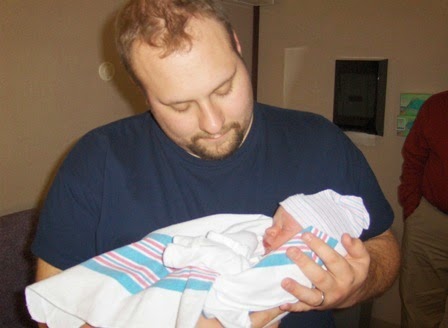
New baby, New Daddy March 2007

Matching jammies, Christmas Eve 2010

Elmo's World!


I paused at the pictures of James, the preschool years.  Part of me "aww"-ing over his cute baby face, but part of me remembering.  I was the person who knew this child best, after spending each day with him, but even to me, he was a mystery.  I spent so much time deciphering gestures and hoots and squeals.  I watched him so closely after the doctor gave him the autism diagnosis, searching for any clue that he'd been wrong, and equally wondering if maybe he was right.  Were James' needs met?  I think so.  But I couldn't be sure; even now I'm not certain if I chose well or completely missed the mark. (Maybe he'll tell me one day.  Kiddo, I'm listening, I promise.)

"James is flying!"

My balloon boys, Fall 2010


Dressed as his second favorite food while collecting his third favorite food
Halloween 2013

I know he liked to be outside.  This was evident even when he was a month old.  Something about stepping through the door from the closed-in, warm house into the chilly spring night air calmed him.  I know he liked to watch Elmo.  From the first time I popped an Elmo's World DVD into the player and that high-pitched fur ball began to speak, my son was riveted.  He quickly figured out the symbols on the machine for play, open, skip.  I regretted exposing him to it when I lost the ability to watch my own shows and movies during the day (a right I am just now regaining...everyone has to be quiet and go play somewhere else so Mommy can watch Downton Abbey!).  James was also a fan of simple $1 pleasures.  A small fry from McDonald's...and OH BOY if we didn't stop at any of the four we passed on the way to speech therapy, I heard about it from the backseat.  Not in words (hence the speech therapy), but his point was clear.  A red balloon from the grocery store...how our trips were transformed from short-term family torture to quick and *almost* easy when we tied that balloon to the front of the cart and plunked him down in the seat.  He would stare up at it, pull on the ribbon, watch it float back up.  I can't even remember when we stopped doing that, when he no longer asked for it by halting and gazing longingly behind the floral counter.

I have heard grumblings in the autism community against the use of the puzzle piece to represent the disorder.  I think one of the points is that a puzzle represents children, who only make up a small percentage of people living with autism (clearly people who haven't done a 1000 piece puzzle like the one I helped my parents complete in December).  But mostly I think it's that the metaphor doesn't hold up.  See, when I do a puzzle, I start out with all the pieces, and the goal is to fit them all together correctly.  When that is accomplished, I have a finished puzzle.  I can see the image clearly, and I'm done.  I used to look at James like a puzzle to be solved.  I was flipping them over, searching for edge pieces, grouping the greens and the purples and the reds and the whites.  I rearranged the pieces and changed my seat and sat back with a cup of tea, desperately hoping that a change in perspective would make a difference.  Lately, Autism Speaks has tried to promote this idea that something is "missing" in autistic people, autism research, the elusive autism answer.  If my son was a puzzle, then that would seem likely.  If my son was something to be figured out, if he would someday be a clear and complete picture, then I would agree that some of the pieces must have fallen on the floor or been eaten by the dog.
My boys: Mikey trying to be like his brothers even though his balance is not as good as theirs,
Winston sitting in the middle not needing his parents' touch
James taking refuge in my arms from the heat and the photo session

But I tend to side with the autistics.  I no longer see my son as a puzzle, nor is it my job to solve him. Instead, as I look back through these photos, I think of a mystery.  Isn't every person a certain amount of mystery to those around them?  What secret memories do they hide?  What unfathomable depths form their soul?  What are they thinking when they tap their chin, look out the window, at this very moment?  The best part of any relationship is unraveling the mystery.  And that's what I am doing with my son.  The little boy in those photos has a terribly choppy buzz cut, because he shrieked so loudly and protested so vehemently every time we took him to a hair salon and the lady approached with scissors, that I started cutting it myself.  It would take a long time, sometimes even an hour, but if I perched him on the bathroom sink and let him splash naked in the water, he would hold his head still-ish for me to buzz off the overgrowth of hair.  It wasn't always easy for me, but it was the only solution I could find.  I don't cut his hair anymore.  Now we look through "Going Places" on the iPad and talk about what is going to happen and then we walk into the hair salon and he sits in the chair and plays some version of Angry Birds and holds relatively still for about 10 minutes while the lady quickly cuts and trims.  And after 10 minutes he begins to squirm and slide and removes his cape and tells me "All done Mom" and I tell the lady "Good work, we are finished" whether she thinks she is done or not and we pay and leave.  Oh, and he gets a sucker.  I fully expect that in another five years, hair cuts will look different from now, just as now they look different from five years ago.  Because unlike a puzzle, a mystery has the ability to change.  A mystery is a fluid, ethereal secret.  A mystery has no end date, no final picture, no completion.  As soon as one question is answered, a dozen more need to be asked.  Sometimes we have to just accept that we can't know everything.  But I understand that there is no easy, pleasant bumper sticker picture to accompany calling our loved ones a "mystery".  Maybe a door?  Or an image from the Hubble telescope of space (I know James would like that one)?
red-door.jpg

Thursday, December 11, 2014

Autism Speaks Doesn't Speak for Me

A few years back, I signed my family up for our local Autism Speaks fundraiser walk.  I was looking forward to an activity we could all do together, surrounded by people who wouldn't think us odd or unruly.  I was happy to raise money and encourage my friends and family to do the same; after all, Autism Speaks was the only organization I'd heard of for people like my son, recently diagnosed with an Autism Spectrum Disorder.  We arrived on the morning of the walk, a sunny Sunday that was perfect for spending time outside at our local park.  We converged with many other families.  We saw large groups wearing matching shirts; we saw men dressed as superheroes and women dressed as princesses.  It was my first experience with an autism community after an isolating couple of years filled with tests and questions and frustration.  I kept looking around in wonder that there were so many people like us, that we had found a place where our son could be accepted easily.
Wearing blue as we walk for Autism Speaks 2012

There was something else I noticed that morning.  The walk organizers had posted signs along our path announcing statistics about autism.  There was one stating the latest CDC findings of autism occurrence.  There were signs about the cost of treating autism.  It was good to remind us why we were walking.  It was good to spread awareness among the walkers and anyone else out that morning.    But I got uncomfortable when I saw the sign comparing autism to pediatric cancer and AIDS ("More children are diagnosed with autism than pediatric cancer and AIDS combined.")  After all, autism affects my son's mind; it makes him process information differently.  But cancer and AIDS...they affect the body.  They make children sick.  They require lengthy hospital stays and expensive medication.  And they are lethal.  Autism will never take my son's life.  A lack of support and understanding by strangers could very well put him in danger, something that has happened to autistic teenagers and adults who have been unable to communicate properly with police officers and other public officials.  Beyond that, I am thankful every day to be the mother of healthy children, to be able to send my kids to public school, to barely give cold and flu season a passing thought.  The comparison of neurology and immunology seems ridiculous.  Then I saw some walkers carrying signs which demanded a cure.  A cure?  For autism?  Therapy, sure.  Assistive technology to bridge the differences between my son's mind and the neurotypical world in which he lives, of course.  But what would we be curing?  If some medication took away my child's autism, what would be left?

I went home feeling unsettled, but not sure what it meant.  Over the coming months, I learned more about the organization we had been supporting for our walk.  Autism Speaks.  What a great name.  For the confused and desperate parents trying to figure out how to best care for a non-verbal child, what a promise it offers!  They state on their webpage that their goal is "to change the future for all who struggle with autism spectrum disorders."  That's something this advocate mama can get behind. But how are they actually doing that?  What percentage of the money raised from walks like the one my family participated in is being used to alleviate the "struggle" of autistic individuals?  I read a book called "Raising Cubby", which introduced me to its author (and awesome role model for my son), John Elder Robison.  The book offered insight into the experiences of growing up autistic, the criticism and confusion he experienced, as well as the jobs and discoveries his mental makeup allowed him to excel at.  And then I read his blog about resigning from Autism Speaks after his efforts to be heard were repeatedly ignored.  He writes, "We do not like hearing that we are defective or diseased.  We do not like hearing that we are part of an epidemic.  We are not problems for our parents or society, or genes to be eliminated. We are people."  This resonated with my feelings after the walk; this put words to the twist in my stomach.  My son is not sick.  My son is not a problem or a burden.  And an organization that describes itself as changing the future for autistic people shouldn't be misleading the public about what exactly they struggle with.

I found more perspective on my beloved Diary of a Mom blog.  I read her words and nodded.  Yes.  YES.  This organization that compares my son's brain to an immunodeficient body is missing it.  They are missing what it is like to live with autism.  They are missing what is going on inside that beautiful brain.  This organization that claims my son is a burden is missing it.  They are missing the joy we experience every day as a family of five.  They are missing the laughter and chatter coming from the bedroom he shares with his brother long after the lights have been turned off.  This organization who claims that my son is MSSNG, or that he is MSSNG some vital component of humanity, they are missing it.  They are missing the vital presence of autistic people.  They are missing the conversation autistic advocates are desperate to have.  They are speaking, but they don't speak for our family.  They don't speak for my son.  

He is learning every day, he is gaining words and the skills to express himself.  We are equipping him to speak and stand up for himself.  And the greatest opportunity we can give him is to listen.  That voice, oh how that voice delights me.  If he's angry, he tells me.  And I want to know: Why are you angry?  What do you do with those feelings?  What can I do to help you?  If he's happy, he tells me.  And I want to know: What makes you happy?  What can I do to make you feel happy more often?  And sometimes he just laughs.  I don't know why, it's something that only he is seeing or hearing.  So guess what I do?  I laugh with him.  It doesn't really matter what's causing it, honestly.  I love an excuse to let out a good belly laugh.  And then he looks at me, as we laugh together, and often he hugs me as we experience this happy moment.

So this is my plea, today and every day:  Don't support Autism Speaks.  Give your money to an organization that will actually use it to help autistic people right now.  How will you know which one is doing that?  Use this guideline, shared so generously by John Elder Robison:

"What we need right now are therapies to help us be the best we can be, as we actually are.  We need tools to help us overcome physical limitations.  We need solutions for the medical problems that plague many people on the autism spectrum.  Those are things autistic people – child and adult alike – want and need right now.  The range of therapies, tools, treatments, and services needed is long and varied – and largely attainable, given the budget and the focus.

We also want societal change and acceptance.  We want sensory friendly workplaces.  We want jobs shaped to our different abilities.  We want help navigating the education and employment mazes.  We want to be productive members of society.  Those too are things we want and need right now.  They too are attainable given the resolve, budget, and legislation to back it up."

Tuesday, September 16, 2014

On Community (not the TV show)

It was supposed to be an uneventful morning.  It was supposed to be relaxing.  But who am I kidding, when is my life ever uneventful?  I got the big boys ready and off to school and then it was time to take the littlest one to the library for story time.  We are enjoying these quiet times together and exploring what he likes independent of his brothers and their dominating interests.  But we didn't just play with the trains and sing songs with Miss Renee.  This morning we met Katie and Scotty.  We were minding our business when Scotty came over to play with Mikey.  He had been reading books with his mom, but decided to get on the floor instead.  Mikey didn't want to share, which made Scotty cry and run back to his mom.  I thought to myself, there is something going on there, and moments later she confirmed.  Scotty was recently diagnosed with a Sensory Processing Disorder and his mom suspects further testing will reveal an Asperger's diagnosis.  He just started therapy and there is so much to work on, she said.  I nodded sympathetically.  I KNOW.  And then I said, "My oldest son is on the autism spectrum."  Words I used to avoid.  Words that brought me to tears every time I said them out loud.  But look at me now!  Casually telling this stranger about my special child.   Because we are part of the same community.

She wanted to talk more.  She told me about her family, how they are not supportive, how they undermine her when her son goes there for the weekend.  So I told her, "You are the mom.  You know your child, you know what he needs.  So do it.  It is hard, and sometimes it takes a really long time to see any progress from it.  But you'll do it."  She nodded and said, "I really needed to hear that."  Katie, I KNOW.  I needed to hear it too.  Sometimes I still need to hear it.  There are a ton of different ways to parent, to be a good mom, and you need to trust yourself that the way you have chosen is correct.  You need to be reminded that your son isn't bad, he's just special.  And that means the way you parent him will have to be special.  You will do it because it's your job.  You will do it because, although this isn't the child you thought you would raise, it's the child that you have, and he's amazing.  It gets easier to see the amazing and stop focusing on the problems as you go.

Can I just say how much more desirable it is to be the one saying "It gets better" than to be the one hearing it? This keeps happening to me, these opportunities to meet newly diagnosed kids and their caregivers, and every time it takes me back (almost five years now) to those days of fear.  I treated my son's diagnosis like all hard things in my life to that point:  I hid.  I buried the truth inside and pulled away. Fear and shame have isolated me for so much of my life, and this was no different.  I was afraid of what people would say, how they would treat us if they knew.  But my silence and my secrets have hurt me deeply.  And so finally I took a chance and reached out.  It was around this time that I met Mandy, who is not part of the special needs community, but took me under her wing and brought me to a literal Village who accepted my whole family in a way I'd never experienced before.  And because of these people teaching me about community, about give and take, about showing up with your mess and letting them wash it clean, about forging a family independent of blood or marriage, I can tell Katie what she needs to hear.  I can be the lifeline that I once needed.  I can offer camaraderie and turn a library into sacred space.

Glennon Melton of Momastery.com says that we belong to each other.  This is true of moms, of special needs families, of PEOPLE.  We need each other.  We need all of our experiences, we need all of the answers we have found, we need encouragement and support and a thousand times over we need to LOVE.  If you are in hiding, COME OUT.  We need your story, we need your passion.  And we just might hold the keys that will set you free.

Thursday, April 24, 2014

Autism Acceptance

Are you sick of these yet?  Do you feel like sending me some new sheet music so I can play something other than this one note?  I feel that way myself sometimes.  Like, just talk about something else, right?  But just when I start to write a blog about how much I love to binge watch shows on Netflix, my fingers take over and the words come out different.  Because there are other times when I think, Why bother to do this at all if you're not going to do something worthwhile?  If I can't use my words, my blog, my hair to tell people how much I love my kids and how much they should love the kids in their lives, then what am I doing?

You've seen the puzzle pieces, you've read the articles, you wore blue!  You are AWARE of autism.  And, with 1 in 68 children in the US being diagnosed with an Autism Spectrum disorder, how could you not be?  Now that we're all here, it's time to collect your belongings and move on, to that door marked "Acceptance".  Don't just know about autism, ACCEPT it.  Understand that the child you see melting down at the store very well might be suffering a sensory overload, or having difficulty processing the transition from the car to the building.  Realize that the person on their iPad is using that amazing technology as a tool...it enables his family to enjoy dinner at a crowded restaurant, it's teaching him to speak and write, it actually engages a child who might otherwise be withdrawn into himself.  Celebrate when your friend tells you that her 10 year old learned to tie his shoes, even though your own kids mastered that skill at age 5, because development doesn't always come in a straight line.

My family is different from yours...except when we aren't.  We love each other fiercely.  We dance in our living room.  We get on each others' nerves and need time alone to recharge.  My 7 year old has terrible tantrums sometimes, and I am constantly trying new ways to reach him, to help him find his calm.  When I ask him questions, I have to wait patiently for an answer.  Sometimes it takes him years to give it.  He is also gentle and kind.  Did you know that my children only fight with each other about once a week?  That most days, they are in a nice groove, and they give to each other and walk away from each other, that they hold hands without being prompted and sneak into each others' beds to cuddle at night?  Did you know that raising an autistic child has taught me an entirely different way to look at the world, and I'm a better person for it?  Did you know that when you accept someone with a neurological difference, that you start accepting all kinds of other folks: people in wheelchairs, people with Down Syndrome, people with addictions and criminal records and even people who liked the series finale of Lost?  Because the definition of "what matters" and "who is worthy of my time" is completely re-written when you can't project the best image of yourself onto your child.  When you have to accept him for him or lose your mind, because he refuses to be something he's not.  And then you'll be free from that conveyor belt you SO DESPERATELY wanted to live on, and you'll realize it's actually pretty nice here, where time moves at a different speed and success looks so different from how you always saw it.

It's okay if you don't like my son.  Really.  If you spend time getting to know him and decide you just don't care that much about Angry Birds or you like big crowds, it's okay to go in another direction.  Because you took the time.  Because you looked at him and saw another person with feelings and interests and a huge heart.  Because you accepted who he is and didn't try to change him.

Happy April friends.  See you here again next year for Autism Acceptance Month.

Friday, May 24, 2013

Teaching

Its the end of another school year, which means it is time to evaluate, gather information, make important decisions that will affect the years to come.  This year has been so wonderful, my son has made so much progress, but will a different classroom make next year just as wonderful?  Will a new teacher, a new school, completely throw him off and send him into a tailspin of behavior?  Will he lose out on that last available spot?

I went to school like most kids...when I turned 5, my parents signed me up for kindergarten.  The next year I went to first grade, then second, and so on until I graduated high school.  When I became a mother, I figured I would do the same as my own parents had done, and didn't give the school question much thought in the hazy days of breast-feeding and diaper changes.  And then the bottom fell out and my son was diagnosed.  I didn't even know what options there were.  I searched my mind, trying to remember where those special kids were during my own education.  What did they learn?  What were their test scores?  I was always so concerned about who was ahead of me, whose grades were better, who was going to be class valedictorian.  I never thought about who was behind me.

Now I think about it every day.  I'm raising one of those kids who is "behind".  And I am endlessly grateful for the teachers who take the extra time and care that is needed to educate him, and those like him.  The ones who take pride in a student who started the year non-verbal, and is now participating.  The ones who know when to push, and how far to push.  The ones who see the accomplishment in just standing through an entire kindergarten concert.  The ones who are constantly learning and adapting, trying to find the best way to reach every single kid.

Psalms 126 says, "Those who plant in tears will harvest with shouts of joy."  I think it means that anything worth doing will be difficult.  There have certainly been many tears throughout the past few years, mothering these small children, figuring out who they are and being astounded at what they are capable of.  Things got pretty biblical during potty training, as I gnashed my teeth and tore my clothes and lay on the bathroom floor in misery.  But my sons use the toilet now, they flush and (sometimes) wipe and wash their hands.  I have faced off with James about writing his letters (and I'm sure his OT has similar battle scars), but now he can do it.  And the craziest thing is, I have no indication of when to push.  When the time is right to start something new.  Just a Mommy-sense that he's ready, and then we go for it.  I used to be afraid of that, scared that I was imposing my own timeline on him.  And that's definitely part of the struggle, not to compare him to others.  But he doesn't belong shoved in a corner, playing with blocks.  He's ready to go forward, ready to read and add and before we know it, conquer quantum physics.(I'm going to have to find someone else to push him there, though, this Mom doesn't understand anything past 8th grade science class)

I didn't expect to have to work so hard so that my son could learn.  I expected to just jump on the parent auto-ramp and cruise through high school.  But I'm holding on to the promise of harvesting with a shout of joy, knowing that all the tears will be worth it someday.

Sunday, April 7, 2013

This I Believe


" And we are not perfect.  We say the wrong thing.  We grow and we change and the words we spoke in the past are words of which we now repent, but that is the nature of sanctification and there is no one exempt from that process."  -Fabs Harford

I believe that words are important.  I believe that what we say and what we write can affect people, and it is our choice to encourage and build people up, or tear others down with our negativity.  So often, as I was growing up, my parents would admonish me to THINK before I spoke, usually as a follow-up to something insensitive or inappropriate that had just come out of my mouth.  I would sigh in exasperation, because the challenge to evaluate all spoken words before enunciating them, and discarding the unnecessary ones, seemed too much for me.  I didn't want to stop long enough to consider my words, I wanted to get them out, to share them with others and join in.  People gave me labels: I was cynical, sarcastic, jaded.

I often wrote as I grew up, I filled notebooks with thoughts and observations.  I still wonder if anyone is ever going to read those words or if they will get thrown away at some point, without being seen by the world.  I want to have influence, I want to share my mind and my feelings, but I lack the confidence that I have anything worth saying.  Then I started a blog.  I began not knowing what to write, and the first year I think I wrote 3 entries.  My husband was the only one to read them.  The next year I posted just once. 

It was surreal to find myself, this lover of words, the mother of a non-verbal child.  I yearned for the day I would hear him speak, when we could converse and share our words and learn more about each other.  It didn't come.  The doctors and the speech therapists and the educators all told me the same word: autism.  They gave other words and phrases, like developmental delay and no imaginative play and isolated and early intervention.  We started therapy and preschool and while he struggled to find his voice, I did too.  I couldn't figure out how to tell people what I was coming to terms with, the reality of having a son with a "disability".  I found myself dropping out of the mom-petition, avoiding playdates and birthday parties and listening with jealousy as the other moms compared their children's milestones.  I wondered if my child would ever use a toilet, make a friend, learn to read or write his name, much less play on a basketball team, speak Spanish, or write a play for his third grade class to perform.

I was scared for my son to receive an official diagnosis.  I was afraid of that word, afraid of what being associated with that word might mean for him.  Would he become a target of bullies?  What other words would they call him, when they saw him riding the "short bus" that is no longer short?  How many times had I made jokes at others' expense, how many times had I declared something "retarded" in my adolescent speaking-before-thinking phase?

But I came to realize its not a word spoken by a doctor in a white coat that I am afraid of.  Its what we are teaching all of our kids about words and about how we treat people who are different from us.  And that's when I found my voice.  I began sharing my opinions and stories and family with the internet, simultaneously afraid that no one would read and afraid that everyone would.  I found, through blogging, that I could form my words, gather my thoughts, and take the time to present an idea without being offensive, hurtful, thoughtless.  Although it can often be a place where people comment without any regard for the fact that a person is on the other end, reading their words, for me, the internet is the place where I finally learned to think before speaking.  I can look at a person's profile picture, I read about their struggles and hopes, and I take my time forming a response.  My hope is that what comes out is different, so that people perceive me differently.  So that they use words like "loving" and "encouraging" to describe me.

Another benefit of speaking boldly for my son and others like him, is that he is now finding his voice.  He is speaking and learning to read; he is expressing his needs and communicating to others.  One of his favorite stories is The Lorax by Dr. Seuss.  I love to hear him loudly proclaim, "I am the Lorax...I speak for the trees, for the trees have no tongues."  Where I once saw myself as speaking for my silent son, now I wonder what voiceless, invisible group he will speak for. 

Tuesday, April 2, 2013

Autism Awareness

 
April is Autism awareness month...but in my house, every month is Autism awareness month.  Every day of my life is affected by autism, because my son is living autism.  Sometimes it feels like a burden to educate everyone he comes into contact with about his "condition", his "limitations".  Don't get me wrong, I appreciate every single person who cares enough to drop down to his level and ask him questions, those of you who try to involve him in the church programs and the play groups.  But some days I just want him to be able to play and spin and make weird noises and have that be normal.  That's why I love being around other Autism families.  Because the high-pitched shrieks and constant motion don't stick out so much when five or 10 or 50 other kids are doing it too.  I've been finding my people, these other families who know how it is, by doing the Autism Speaks walk and attending Sensory Storytime at the library.  The kindred moms who chaperone the field trips and join the online community through facebook and blogs.  I didn't realize how isolated I felt until I found them, and jumped instantly into the alphabet soup shorthand of special needs... OT and IEP and ADOS, IDEA and DD and SPD.  Our experiences are varied, yet the same.  Does your extended family understand what you're going through?  Do they try to help?  What about friends, neighbors, coworkers?  Do you feel like your child's teachers and therapists are allies or adversaries?  Do you like your doctor?  Do you feel like crap after IEP meetings and parent/teacher conferences?  Do you doubt yourself?  Do you wish your child was "normal" while also loving what he's brought to your life?

Oh yes.  These people get me.  But in honor of this fantastic blue month, I want to share three things I've learned as an Autism Mommy that maybe you don't know.  They are the three things I wish I'd heard from the smug neuro who leveled us with a diagnosis and an indifferent attitude about how our lives would be different from those of the typical families.
What the doctor should have said:
1.  If you've met one person with autism, then you've met one person with autism.  I hadn't experienced much first hand before becoming a mom.  I only knew one person for sure that I'd interacted with who was autistic.  My son is almost nothing like that other boy, except they share a medical diagnosis.  Never assume what an individual is capable of based on one word.  Because its a "spectrum" disorder, these people are all over the place in terms of skills, knowledge, communication, interests...but they are all people, all worthy of love and freedom and life.  Which leads me to...
2.  Different, not less.  I can't even say these words out loud without crying.  They mean that much to me.  My son is ABSOLUTELY different from typical children; he knows it, they know it, anyone spending five minutes with him knows it.  But he is in no way LESS of a person, less worthwhile, less loveable.  He is a circle to his brother's straight line; he is a square peg in a world of round holes.  His mind is a mystery, even to me, the one who birthed him and carried him and spent every day with him, but it is a joy to discover how it whirs and contemplates and makes sense of this life he's been given...
3.  Watch and learn.  Too many doctors give a "prognosis"...fancy medical term for incapacitating fear instilled in parents without much basis in reality.  We sit in the sterile rooms and look at the framed diplomas and imagine these men and women to be masters of the body and conquistadors of the brain, and when they say horrifying things like "Your child will never talk" or "Your child will never be able to have a real friend" or even something completely absurd and incalculable like "Your daughter will never go to Prom", we listen.  We readily accept as truth something that NO ONE has any way of knowing.  Remember #1 on my list?  Yeah.  So when you meet an autistic individual, especially when you parent or grandparent or are an uncle or aunt to someone like my son, put it all out of your mind.  Just pay attention.  Become a student of your child, just like any other parent does, and you will learn their triggers and their shortcomings, yes, but you will find out so much more.  You will see fans where you never noticed them before, you will be aware every time a school bus passes, you will see a snake not as a horrifying predator but something to be stroked and loved.  You will see a boy in a wheelchair and look beyond the disability to see the beautiful person inside.  You will notice every time another person cries, whether it is your baby or a stranger, and you will feel distress because that person is sad and you can't take it away.  You will know where every McDonald's is in your county, and you will shake your fist at those all-too-visible golden arches and wonder why there are so many.  You will realize that the only worthwhile part of cupcakes is the frosting.

I hope I can educate people and dispel the myths surrounding people like my son.  I am so grateful to the other moms and dads who share their everyday experiences and moments of transcendent wonder in ways that are poetic and informative, and I will keep striving to achieve that here (someday!).  And now I leave you with the immortal words of Ms. Jamie Lee Curtis:
"Different means nobody's ever the same.
All bodies are different and so are all brains.
Different is what makes this world so great.
Different is never something to hate."

Wednesday, February 20, 2013

Accepting the Autism


Three years ago, my family traveled to Children's Hospital.  It was the final stop on our journey, our quest to find an answer.  Why didn't my almost-three-year-old son talk?  I knew what they were thinking, the direction the other experts were leaning as they evaluated his speech, his motor skills, his ability to follow directions.  But I so desperately didn't want that answer.  I didn't want to hear the dreaded A-word.  I did so much research, so much preparation for our meeting with the Pediatric Neurologist.  I noted all the ways my son did not fit the descriptions (and ignored all the ways that he did).  But there we sat, in that small exam room, and that smug doctor said, "Your son has autism."  I argued with him for a while.  I presented my case.  Chris took James to the waiting room to look at the aquarium because he couldn't wait in that space any longer.  Finally, the smug doctor said, "I can tell you're very intelligent and you've read alot on this subject, but I've been doing this for 30 years and have yet to be wrong."  Oh, I wanted to smack him.  He didn't understand what he was doing to us.  He didn't understand how grave his words were.  I gathered my papers and left.

Until then, my experience with autism had been very limited: a one-time viewing of Rainman, the strange boy from my high school who flapped his hands as he walked down the hall, and Andrew, the 11 year old boy I babysat.  None of these instances reminded me of James.  For one thing, they were all verbal.  James only said a handful of words, and he hadn't added any new ones for more than 6 months.  Most of my denial rested on Andrew, the one I had the most direct interaction with.  I watched him every Saturday morning for more than a year, and I'm pretty sure he never learned my name or even noticed when I stopped coming.  He would sit, rocking, and recite the TV guide.  Rarely did anything actually happening in his general vicinity show up in his speech, nor did his tone ever fluctuate with emotion.  We never conversed.  On the other hand, my darling son, with whom I spent every day, was cuddly, affectionate, and happy to see the people he loved.  He cried whenever we left him, or if his Nana and Grandpa were headed out the door.  I never noticed him doing any odd "stereotyped" behaviors, like flapping, rocking, spinning.  Most importantly, he looked at me.  In the eye.  Sometimes he sat on my lap and we stared at each other.  The autism community has many helpful phrases, one of which is "If you've met one autistic person, then you've met one autistic person."  In other words, despite having the same diagnosis, each individual experiences it differently, unlike the time four of us had strep throat, and we all had red tonsils and took antibiotics.


My biggest fear in receiving the autism diagnosis was its permanence.  I knew enough to realize that it wouldn't go away.  It wouldn't be cured.  It would be with us forever, and there was no way to predict how severely it would affect not just James, but our entire family.  I had more concerns when I read the doctor's folder of information a few days after our visit.  People with autism do not feel empathy.  They lack imagination.  They can't show emotion.  If there were ever to be a basic list of what I want for my children, at the very top would be that they would feel love and would care for not just themselves, but the people around them.  That they would know the wonder and joy of the human imagination, where there are no limits.  And these pamphlets threatened to prevent my darling child from experiencing any of that.

So for a while, I struggled.  We followed the experts' advice: we enrolled James in an early intervention preschool, and that summer we began private speech therapy.  I kept hoping that somewhere along the way, someone would correct this mistake.  They would look at James, really engage him, and say incredulously, "Your son doesn't have autism!  He's just ----."  And whatever that ---- was would have a clear and simple solution.  If he would just start talking, he could explain to them all how wrong they were!  I became more intentional at home, reading more books and using more words to describe what we were doing.  I made flash cards and posters.  James wasn't too interested; I usually ended up with just 1 year old Winston filling the place his older brother had vacated.  I also spent nights beating myself up.  I just couldn't imagine that this wasn't all the result of some terrible failure of mine.  I would go over and over my pregnancy, my delivery, his first few years.  What could I have done so wrong that my child didn't develop the way all his peers seemed to?

The only thing that seemed to help me face what I was denying was time.  As the days and months and years went by, and James met more and more people, and none of them ever said those magnificent words.  As I spent more and more time finding out about Autism, meeting other parents and children who faced it.  It became harder and harder to ignore what was there.  My son is autistic.


The truly amazing thing happened once I accepted the diagnosis.  Once I said it out loud, and believed it in my heart.  That's when I started to let myself off the hook.  That's when I started to look for the hidden blessings in this new reality, the abilities in my son's disability.  And that's when I realized that James isn't Autism.  James is a boy who loves to play Angry Birds, whether on the iPhone, with his plush birds and some blocks, or those tiny rubber Angry Birds.  James is an older brother who gets territorial when the younger ones try to mess up his stuff, who kisses the baby when he cries, who hugs fiercely when he gets home from school after being away from them all day.  James is an affectionate and empathetic person, who gets distressed when others are upset, who smiles expectantly and wants to know the joke when people around him laugh, who gives kisses and high fives to the people he knows well.  And most importantly, he's my son, my cuddle buddy, my special boy.  I couldn't separate him from Autism any more than I could make him be outgoing, or suddenly make him Asian.  But all of his characteristics and personality and neurological differences add up to the awesome person who is my James.

Tomorrow morning, we're heading back to Children's.  James will be evaluated to be given an official "diagnosis", a place on the spectrum.  I'm not fighting the experts this time, I'm not even hoping someone will say, "He's not autistic!" (because, Good Lord, what do we do with that?!)  But I also don't really care too much what the results say.  If his school, his doctors, his teachers and therapists need to classify him to make their jobs easier, if they need to call it something, then so be it.  But to me, he was, is, and will always be my son, and I will call him James.